The $100 Trillion Climate Bet: Who Pays, Who Profits, and Who Loses
Table of Contents
- The Winners
- Clean Energy Producers and Installers
- Critical Mineral Producers
- Electric Vehicle Manufacturers
- Climate Adaptation Companies
- The Losers
- Fossil Fuel Producers
- Petrostates
- Climate-Vulnerable Nations
- Workers in Transition Industries
- The Politics
- The Time Inconsistency Problem
- The Geopolitical Coordination Problem
- Our Assessment
- Probability Assessment (2025-2035):
- What We're Watching
- The Bottom Line
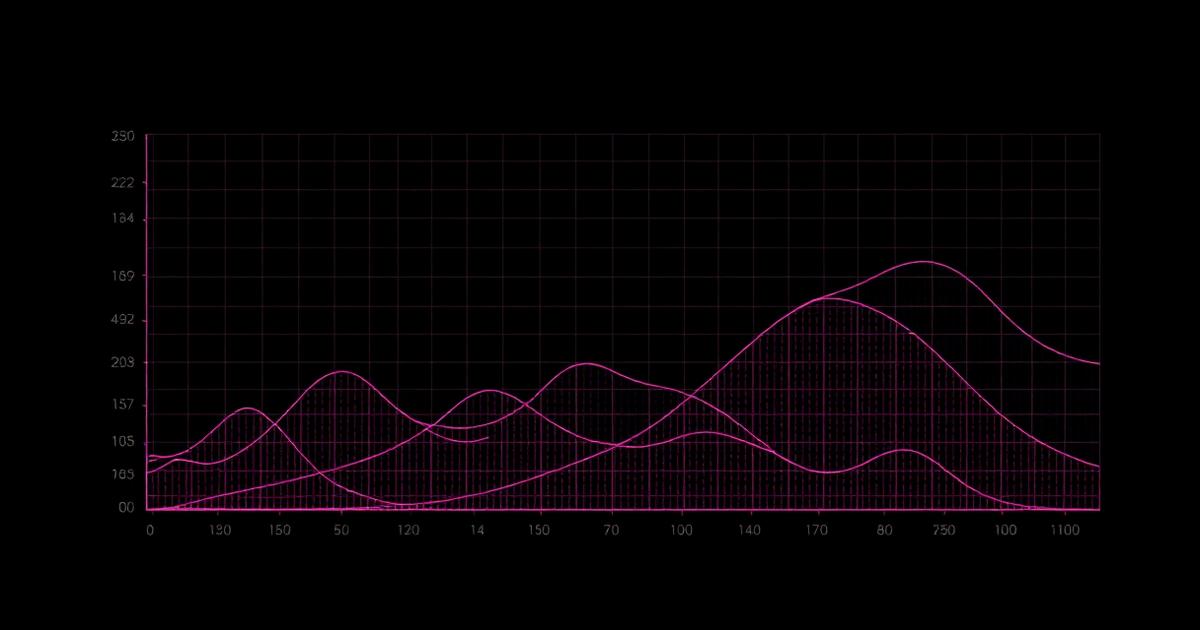
The energy transition will cost $4.5T annually through 2050, but inaction costs more (10-23% GDP reduction). Winners: clean energy (solar costs down 90%), critical minerals, EVs, adaptation companies. Losers: fossil fuel producers (80% of coal reserves must stay unburned), petrostates, climate-vulnerable nations, transition workers. Temperature exceeding 1.5°C: 85-90%. Net-zero on track: 10-20%.
- 01Solar costs have fallen 90% since 2010 and continue declining — clean energy is now cheapest in most markets
- 02To meet 2°C targets, 80% of coal, 50% of gas, and 33% of oil reserves cannot be burned — stranded asset risk is real
- 03Petrostates facing revenue decline may become less stable, more aggressive, or both
- 04The adaptation market alone is estimated at $2-3 trillion annually by 2030
- 05The climate transition is a political problem, not a technical one — the technology exists, the politics don't
Climate change is often framed as an environmental issue. It is not. It is the largest economic redistribution in human history.
The International Energy Agency estimates that achieving net-zero emissions by 2050 requires approximately $4.5 trillion in annual energy investment — roughly triple current levels. McKinsey places the cumulative cost of the global energy transition at $275 trillion through 2050. BloombergNEF estimates $215 trillion. Pick your number; they're all enormous.
But the cost of not transitioning is larger. Swiss Re estimates that climate change could reduce global GDP by 10-23% by 2100 under business-as-usual scenarios. Deloitte projects $178 trillion in cumulative economic damage from unmitigated warming.
This article isn't about whether climate change is real (it is) or whether the transition should happen (it must). It's about who pays, who profits, and who loses as the largest reallocation of capital in history unfolds.
The Winners
Clean Energy Producers and Installers
The most obvious beneficiaries. Solar and wind are already the cheapest sources of new electricity generation in most markets. The learning curves continue:
- Solar PV costs have fallen 90% since 2010 and continue declining at ~5-8% annually
- Battery storage costs have fallen ~90% since 2010; lithium-ion packs are approaching $100/kWh
- Wind power costs have fallen ~70% since 2009 for onshore; offshore is following
Global renewable energy investment hit $500 billion in 2023 and is accelerating. By 2030, annual clean energy investment is projected to reach $1.3-2 trillion.
Countries and companies positioned to capture this growth — China (dominant in solar manufacturing, 80%+ global market share), European utilities (leading offshore wind deployment), and US developers (benefiting from Inflation Reduction Act subsidies) — stand to profit enormously.
Critical Mineral Producers
The energy transition requires massive quantities of lithium, cobalt, nickel, copper, rare earths, and other minerals. As detailed in our analysis of rare earth supply chains, control over these materials is becoming a geopolitical contest.
Countries rich in transition minerals — Chile (lithium, copper), Democratic Republic of Congo (cobalt), Australia (lithium, nickel), Indonesia (nickel), and several African nations — have the opportunity to benefit from resource demand. Whether they actually capture that value depends on whether they maintain resource sovereignty or allow extraction profits to flow elsewhere.
Electric Vehicle Manufacturers
The auto industry is in the middle of its most significant transformation since the assembly line:
- Global EV sales reached ~14 million units in 2023, ~18% of new car sales
- China leads with ~60% of global EV production
- Battery costs are approaching the point where EVs reach cost parity with ICE vehicles without subsidies
- BYD surpassed Tesla in total vehicle sales in Q4 2024
The winners in the EV transition are those who control the full stack: battery chemistry, manufacturing scale, software integration, and charging infrastructure.
Climate Adaptation Companies
This is the less discussed but potentially larger market. Regardless of mitigation success, significant warming is already locked in. Industries that help society adapt will grow enormously:
- Water management: Desalination, water recycling, drought-resistant agriculture
- Infrastructure resilience: Flood defenses, heat-resistant materials, grid hardening
- Climate intelligence: Risk modeling, insurance analytics, supply chain resilience
- Food technology: Alternative proteins, vertical farming, drought-resistant crops
- Health systems: Heat-related illness management, vector-borne disease expansion
The adaptation market is estimated to reach $2-3 trillion annually by 2030.
The Losers
Fossil Fuel Producers
The most obvious losers — but the timeline matters enormously.
Near-term (2025-2030): Fossil fuels still account for ~80% of global primary energy. Demand for oil is projected to peak between 2025-2030 but decline slowly, not crash. Natural gas demand may grow through the 2030s as a transition fuel. Coal demand is declining in the West but still growing in parts of Asia.
Medium-term (2030-2040): This is where stranded asset risk becomes real. Oil companies with high production costs (deepwater, oil sands) face the greatest risk. Gas companies are more resilient but face increasing competition from renewables + storage.
Long-term (2040-2050): Under net-zero scenarios, fossil fuel demand drops 50-80% from current levels. Companies that haven't diversified face existential risk.
The key metric: proven reserves that become unburnable. Carbon Tracker estimates that to meet the 2°C target, approximately 80% of coal, 50% of gas, and 33% of oil reserves cannot be burned. These are currently valued on company balance sheets as assets. Revaluing them as liabilities is the definition of "stranded assets."
Petrostates
Countries whose economies depend on fossil fuel exports face existential transitions:
- Saudi Arabia: Vision 2030 is an explicit attempt to diversify, but oil still accounts for ~60% of government revenue
- Russia: Oil and gas represent ~40% of federal budget revenue and ~60% of exports. The energy transition, combined with sanctions, threatens economic viability.
- Gulf states: UAE, Kuwait, Qatar face similar dependencies with varying diversification progress
- Nigeria, Angola, Venezuela: Less fiscal capacity to manage transition
The geopolitical implications are severe. Petrostates facing economic decline may become less stable, more aggressive, or both. Resource-dependent autocracies that can't buy social stability through energy revenue may face domestic unrest.
Climate-Vulnerable Nations
The cruelest irony of climate change: the countries that contributed least to emissions will suffer most.
- Small island developing states face existential sea-level rise
- Sub-Saharan Africa faces temperature increases that could reduce agricultural output 20-30%
- South Asia faces heat extremes that threaten human habitability in some regions
- Central America faces drought and extreme weather driving migration
These countries need adaptation investment they can't afford. The $100 billion annual climate finance commitment from developed nations has never been fully met. The actual need is estimated at $200-400 billion annually.
Workers in Transition Industries
The "just transition" is easy to promise and hard to deliver:
- US coal employment has fallen from ~90,000 in 2012 to ~40,000 in 2024
- Auto industry electrification eliminates ~30% of manufacturing labor per vehicle (EVs have fewer components)
- Oil and gas extraction employment will decline as production shifts
New clean energy jobs are being created — solar installation, wind turbine maintenance, battery manufacturing — but they're often in different locations and require different skills. The coal miner in West Virginia doesn't easily become a solar installer in Arizona.
Watching Agents
Don't just read about the future — put an agent on it.
Ask one question. An autonomous AI agent tracks the probability around the clock.
The Politics
The climate transition is fundamentally a political problem, not a technical one. The technology exists. The economics increasingly favor transition. What's missing is political will to manage the distributional consequences.
The Time Inconsistency Problem
Transition costs are immediate and concentrated (specific industries, specific regions). Benefits are future and diffuse (global, long-term, probabilistic). Democratic politics systematically favors the present over the future and the concentrated over the diffuse.
This is why carbon taxes — the most economically efficient climate policy — are politically toxic. They impose visible costs on voters today for invisible benefits decades hence.
The Geopolitical Coordination Problem
Climate change is the ultimate collective action problem. No single country's emissions reductions are sufficient. But if one country bears transition costs while competitors don't, it suffers economically without solving the problem.
This creates a race to the bottom dynamic — or more precisely, a race to delay. Each country wants others to transition first.
The EU's Carbon Border Adjustment Mechanism (CBAM) is the first major attempt to solve this: impose carbon costs on imports from countries without equivalent carbon pricing. If it works, it could force a global race to the top instead. If it triggers trade wars, it could set back international cooperation by years.
Our Assessment
Probability Assessment (2025-2035):
- Global average temperature exceeds 1.5°C above pre-industrial: 85-90%
- Already approaching. Likely crossed temporarily in 2024.
- Major stranded asset event in fossil fuel sector: 40-50%
- Defined as top-20 fossil fuel company losing >50% of market value due to transition dynamics
- Petrostate political instability linked to energy transition: 50-60%
- Most likely in countries with limited fiscal buffers and authoritarian governance
- Global carbon pricing mechanism covering >50% of emissions: 25-35%
- EU CBAM is the leading edge; global adoption faces significant political barriers
- Net-zero on track per IEA pathway: 10-20%
- Current policies and pledges fall significantly short of required trajectory
- Climate migration exceeding 100M people by 2035: 30-40%
- Internal displacement already at elevated levels; cross-border migration follows with lag
What We're Watching
- Annual renewable energy investment: $500B→$1T+ trajectory indicates transition speed
- EV sales share: Approaching 50% in some markets; global average trajectory
- Carbon credit prices: EU ETS, voluntary markets — price signals for transition urgency
- Fossil fuel company capex allocation: Ratio of hydrocarbon vs. clean energy investment
- CBAM implementation and trade disputes: Success or failure shapes global carbon pricing
- Climate finance flows to developing nations: Gap between commitments and delivery
- Extreme weather frequency and economic damage: Adaptation urgency indicator
The Bottom Line
The $100 trillion climate bet isn't a choice between action and inaction. Both paths cost trillions. The question is how those trillions are distributed — across time, across nations, and across economic classes.
The transition will create extraordinary wealth for those positioned correctly and devastating losses for those who aren't. It will reshape geopolitics as petrostates lose leverage and mineral-rich nations gain it. It will test democratic governance as voters face visible costs for invisible benefits.
And the clock is ticking. Every year of delay doesn't just postpone costs — it increases them. The physics doesn't negotiate.
Watching Agents tracks energy transition, climate risk, and geopolitical resource competition across our active prediction topics. For continuously updated probability assessments, explore the platform.
Sources
FAQ
What is Watching Agents?
Turn any question about the future into a living probability.
Articles like this one are a snapshot. An agent is the opposite — it keeps working after you close the tab, revising its forecast every time new evidence lands.
- 01
Ask a question
Anything with a verifiable outcome and a deadline.
- 02
The agent researches
It builds hypotheses, scores evidence and tracks live signals.
- 03
Watch the probability move
One number that updates as the real world changes.